Managing 2026 IRS Gift Tax Exclusion Limit for Estate Preservation
Advertisements
Latest developments on Managing the 2026 IRS Gift Tax Exclusion Limit of $19,000 for Estate Preservation, with key facts, verified sources and what readers need to monitor next in the United States, presented clearly in English (South Africa).
Managing the 2026 IRS Gift Tax Exclusion Limit of $19,000 for Estate Preservation is shaping today’s agenda with new details released by officials and industry sources. This update prioritizes what changed, why it matters and what to watch next, in a straightforward news format.
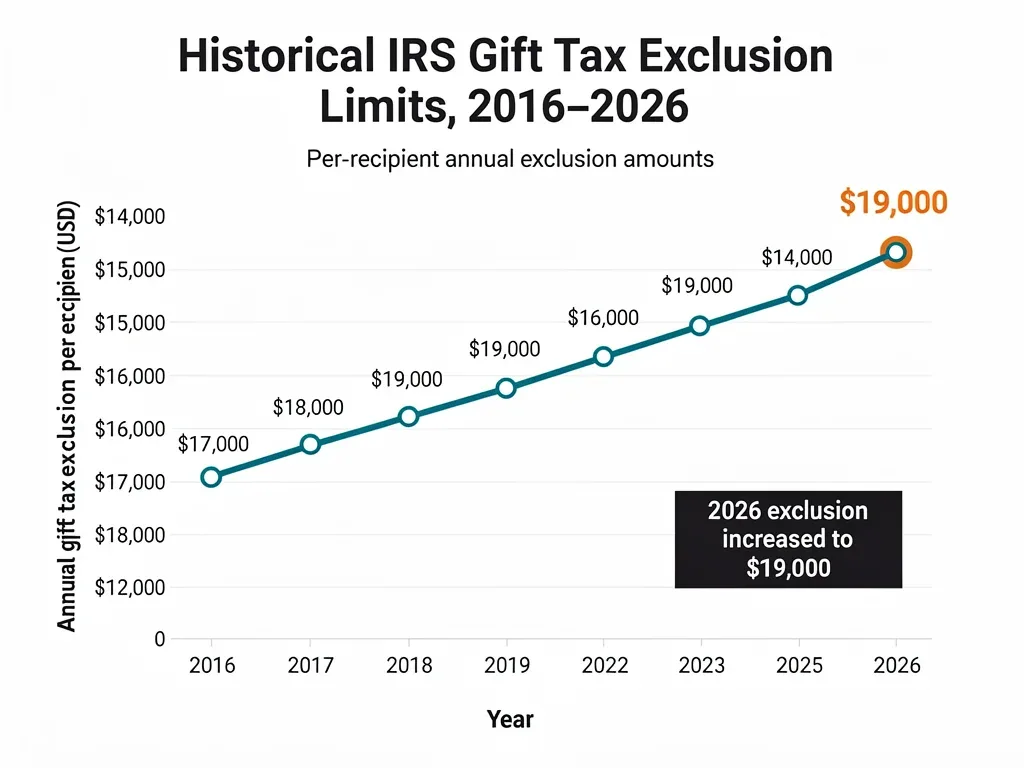
The Internal Revenue Service (IRS) has announced the annual gift tax exclusion will rise to $19,000 per donee for 2026, up from $18,000 in 2025. This adjustment significantly impacts individuals and families engaged in strategic estate planning and wealth transfer.
Understanding this new limit is crucial for anyone looking to optimize their financial strategies and minimize potential tax liabilities. The increased exclusion offers enhanced opportunities for tax-free wealth transfers to beneficiaries.
Financial advisors and estate planners are already preparing clients for these changes, emphasizing the importance of proactive planning. The new limit provides a valuable tool for reducing the size of one's taxable estate over time.
Understanding the 2026 Gift Tax Exclusion Increase
The IRS periodically adjusts the annual gift tax exclusion to account for inflation, a practice that helps maintain its economic relevance. The increase to $19,000 for 2026 reflects these ongoing economic considerations and provides taxpayers with more flexibility.
This adjustment is part of a broader effort to keep tax codes aligned with economic realities, ensuring fairness and efficiency in wealth transfer. For many, this means a greater capacity to transfer assets without triggering gift tax implications.
The announcement confirms what many financial experts anticipated, allowing for ample time to integrate this new figure into existing or new estate plans. This proactive notice is beneficial for long-term financial strategizing.
What the $19,000 Limit Means for Gifting
The $19,000 annual gift tax exclusion allows individuals to give up to this amount to as many people as they wish each year, tax-free. This applies per donee, meaning a donor can give $19,000 to their child, $19,000 to their grandchild, and so on, without using any of their lifetime exclusion amount.
For married couples, this effectively doubles the exclusion; each spouse can give $19,000 to the same individual, totaling $38,000 per donee per year. This joint gifting strategy is a powerful tool for accelerating wealth transfer.
This increased limit directly translates into greater potential for reducing the size of a taxable estate. It provides a straightforward method for individuals to distribute assets to heirs while they are still living, bypassing future estate taxes.
- Donors can gift up to $19,000 per person per year without tax implications.
- Married couples can combine their exclusions, allowing for $38,000 per donee.
- The exclusion applies to an unlimited number of donees, maximizing transfer potential.
Strategic Estate Preservation with the New Exclusion
Managing the 2026 IRS Gift Tax Exclusion Limit of $19,000 for Estate Preservation involves more than just understanding the number; it requires strategic application. Integrating this higher limit into a comprehensive estate plan can yield significant long-term benefits.
By consistently utilizing the annual exclusion, individuals can systematically reduce the value of their estates, which can lead to lower estate taxes upon their passing. This method is particularly effective when implemented over several years.
Estate planning professionals often recommend a consistent gifting strategy to take full advantage of these annual exclusions. This approach can help families transfer substantial wealth across generations in a tax-efficient manner.
Leveraging Annual Gifting for Long-Term Goals
Utilizing the 2026 gift tax exclusion strategically can help achieve various long-term financial goals. This includes funding education for grandchildren, providing financial support to adult children, or contributing to charitable causes.
Regular annual gifting can also serve to introduce younger generations to financial responsibility. It offers a practical way to teach about investments, savings, and philanthropy while transferring assets.
Moreover, these gifts are generally not subject to income tax for the recipient, making them an attractive way to provide financial assistance. This dual benefit of tax efficiency for both donor and donee makes annual gifting a cornerstone of effective estate planning.
Coordinated Gifting for Married Couples
Married couples have a distinct advantage when it comes to annual gifting, as they can combine their individual exclusions. This allows them to gift up to $38,000 to any single individual without incurring gift tax.
This coordinated approach significantly accelerates the rate at which wealth can be transferred out of the estate. For large families, this can mean hundreds of thousands of dollars moved tax-free over a decade.
It is important for couples to plan these gifts jointly to ensure proper documentation and to avoid any potential misinterpretations by the IRS. Consulting with an estate planning attorney is highly recommended to formalize these strategies.
Impact of the $19,000 Limit on Wealth Transfer
The increase in the annual gift tax exclusion directly enhances the efficiency of wealth transfer strategies. It allows for a larger portion of an individual's assets to be moved outside of their taxable estate each year, reducing future estate tax burdens.
This higher limit is particularly beneficial for high-net-worth individuals who are actively seeking ways to mitigate estate taxes. It provides a clear, legal pathway to distribute assets over time, rather than in a lump sum at death.
The cumulative effect of annual gifting at the $19,000 level can be substantial, especially when initiated early in life. This makes it a powerful tool for intergenerational wealth planning.
Avoiding the Lifetime Exemption
Gifts made within the annual exclusion limit do not count against an individual's lifetime gift tax exemption. This is a critical distinction for those focused on maximizing their overall tax-free transfer capabilities.
The lifetime exemption, which is significantly higher, is used for gifts exceeding the annual exclusion. By fully utilizing the annual exclusion, individuals preserve their lifetime exemption for larger, more complex transfers or for future unexpected needs.
This strategy is key to long-term estate planning, ensuring that the maximum amount of wealth can be passed on to heirs without incurring federal gift or estate taxes. Understanding this interplay is essential for effective planning.
- Annual gifts do not diminish the lifetime gift tax exemption.
- Preserving the lifetime exemption allows for larger future transfers.
- Strategic use of both exclusions maximizes tax-free wealth distribution.
Considerations for Estate Planning Professionals
Estate planning professionals must stay abreast of these changes to provide accurate and effective advice to their clients. The 2026 gift tax exclusion presents new opportunities that should be integrated into existing strategies.
Advisors are tasked with educating clients on the nuances of the new limit and how it interacts with other estate planning tools. This includes discussing potential pitfalls and best practices for documentation.
Furthermore, the increase prompts a review of current estate plans to ensure they are optimized for the new exclusion amount. Proactive communication and adjustments are key to successful client outcomes.
Communicating the Changes to Clients
Effective communication is paramount when discussing the 2026 gift tax exclusion with clients. Professionals need to clearly articulate the benefits and strategic implications of the increased limit.
This involves explaining how the $19,000 exclusion fits into their overall financial picture and what steps they should take to leverage it. Providing clear examples and case studies can be particularly helpful.
Advisors should also emphasize the importance of timely action, as annual gifting is a strategy that benefits from consistent application over time. Early planning ensures maximum advantage from the new limit.
Documentation and Compliance with IRS Regulations
Proper documentation is crucial when utilizing the annual gift tax exclusion to ensure compliance with IRS regulations. While gifts within the exclusion limit generally do not require a gift tax return, accurate records are always recommended.
Maintaining detailed records of all gifts made, including dates, amounts, and recipients, can prevent potential issues during an audit. This meticulous approach safeguards against future complications and provides peace of mind.
For gifts exceeding the annual exclusion, a Form 709 (United States Gift (and Generation-Skipping Transfer) Tax Return) must be filed. Even when no tax is due, filing this form is essential for tracking the lifetime exemption.
Best Practices for Record Keeping
To ensure compliance and avoid future complications, individuals should adopt robust record-keeping practices for all gifts. This includes maintaining a clear ledger of all annual gifts made.
Keeping copies of checks, transfer confirmations, or other evidence of gifting is highly advisable. These records should be easily accessible and organized for quick reference.
Furthermore, it is wise to consult with a tax professional to ensure all documentation meets IRS requirements. Their expertise can provide an added layer of security and accuracy.
Future Outlook for Gift Tax Exclusions
While the 2026 annual gift tax exclusion is set, future adjustments will continue to be influenced by inflation and legislative changes. Staying informed about these potential shifts is an ongoing part of effective estate planning.
The economic landscape and political environment can both play a role in how these exclusions evolve over time. Financial advisors and taxpayers should monitor these factors closely to adapt their strategies accordingly.
Long-term estate planning requires an understanding that tax laws are not static and may change. Building flexibility into a plan can help navigate future legislative developments and economic shifts.
Anticipating Legislative Changes
Legislative changes can significantly impact gift and estate tax laws, potentially altering the landscape for wealth transfer. While the 2026 exclusion is set, future policy decisions could introduce new dynamics.
Taxpayers and advisors should remain vigilant regarding proposed tax reforms that might affect exclusion limits or introduce new forms of taxation on wealth transfers. This proactive monitoring is key to informed decision-making.
Engaging with financial and legal professionals who specialize in estate planning can provide valuable insights into potential legislative trends. Their expertise can help individuals prepare for various scenarios.

Practical Steps for Maximizing the 2026 Exclusion
Individuals looking to maximize the benefits of Managing the 2026 IRS Gift Tax Exclusion Limit of $19,000 for Estate Preservation should take several practical steps. Early and consistent action is often the most effective approach.
Reviewing current estate plans and financial goals in light of the new $19,000 limit is a crucial first step. This ensures that existing strategies are aligned with the updated tax code and can be optimized for maximum benefit.
Consulting with an experienced estate planning attorney or financial advisor is highly recommended. These professionals can provide tailored advice and help implement strategies that best suit individual circumstances and objectives.
Initiating a Gifting Program
For those new to annual gifting, initiating a structured gifting program is a practical way to begin utilizing the exclusion. This involves setting up a consistent schedule for making gifts each year.
Determine the recipients and the amounts to be gifted, ensuring that each gift falls within the $19,000 limit per donee. This systematic approach ensures that the exclusion is fully leveraged year after year.
Consider establishing a trust or other legal vehicles for gifts, especially for minor beneficiaries or those who may need assistance managing funds. These structures can provide control and ensure the gifts are used as intended.
Reviewing Beneficiaries and Gifting Goals
Periodically reviewing your list of beneficiaries and your overall gifting goals is an important part of an effective estate plan. Life circumstances change, and your gifting strategy should adapt accordingly.
Ensure that your gifts align with your long-term estate preservation objectives and reflect your current family and financial situation. This ongoing assessment helps maintain the relevance and effectiveness of your gifting program.
Discussing these goals with your family can also foster transparency and understanding, ensuring that your wealth transfer intentions are clear and well-received. Open communication is a cornerstone of successful estate planning.
| Key Aspect | Description |
|---|---|
| New Limit | The annual gift tax exclusion increases to $19,000 per donee for 2026. |
| Strategic Gifting | Use annual gifts to reduce taxable estate without touching lifetime exemption. |
| Married Couples | Can jointly gift $38,000 per donee, doubling transfer efficiency. |
| Documentation | Essential for IRS compliance; Form 709 for gifts exceeding the limit. |
Frequently Asked Questions About the 2026 Gift Tax Exclusion
What is the annual gift tax exclusion for 2026?▼For 2026, the annual gift tax exclusion is set at $19,000 per donee. This means an individual can give up to this amount to any number of people without incurring gift tax or using their lifetime exemption.
How does the $19,000 exclusion impact married couples?▼Married couples can combine their individual exclusions, allowing them to jointly gift up to $38,000 to a single donee in 2026 without gift tax implications. This significantly enhances wealth transfer capabilities.
Do I need to file a gift tax return for gifts under $19,000?▼Generally, you do not need to file a gift tax return (Form 709) for gifts that are within the annual exclusion limit. However, maintaining thorough records of all gifts is always recommended for compliance.
What is the difference between annual exclusion and lifetime exemption?▼The annual exclusion allows tax-free gifts up to a certain amount per donee each year. The lifetime exemption is a much larger amount that can be gifted tax-free over a person's lifetime or at death, after exhausting annual exclusions.
How can I best utilize the 2026 gift tax exclusion for estate preservation?▼To best utilize the exclusion, establish a consistent annual gifting program, review your estate plan with a financial advisor, and maintain detailed records. This proactive approach maximizes tax-free wealth transfer.
What Happens Now
The announcement of the 2026 IRS Gift Tax Exclusion Limit of $19,000 provides a clear directive for individuals and families engaged in estate planning. It underscores the importance of proactive financial management and strategic wealth transfer. As this limit takes effect, taxpayers should consult with their financial advisors to integrate this new opportunity into their long-term plans, ensuring compliance and maximizing benefits. Future legislative changes and economic factors will continue to shape these limits, making ongoing vigilance crucial for effective estate preservation.