Preparing for College 2026: Financial Checklist for Families
Advertisements

The financial guide Preparing for College in 2026: A Financial Checklist for Families (PRACTICAL SOLUTIONS, TIME-SENSITIVE) provides an actionable roadmap for navigating higher education funding in the United States.
This brief details upcoming FAFSA adjustments, critical deadlines, and strategic savings options like 529 plans, helping families maximize financial aid and manage upcoming college costs effectively.
Understanding the Evolving Cost of Higher Education
The cost of higher education continues its upward trajectory, a significant concern for families planning for college in 2026.
Tuition fees, room and board, books, and living expenses all contribute to substantial financial burdens. A realistic assessment of these costs is the first critical step in effective college financial planning.
Recent data indicates that the average annual cost of attendance for a four-year public institution (in-state) can exceed $26,000, while private institutions often surpass $55,000.
These figures are projected to rise further by 2026, underscoring the urgency for families to develop comprehensive financial strategies well in advance.
Beyond tuition, families must also consider indirect costs such as transportation, personal expenses, and potential income loss for students.
A holistic view of future expenditures is vital for Preparing for College, allowing for more accurate savings goals and financial aid planning.
Early Financial Planning: The Cornerstone of Success
Starting early with financial planning for college in 2026 offers significant advantages, primarily through compounding interest on savings.
Even modest contributions made consistently over several years can accumulate into a substantial sum, reducing reliance on loans later on.
Families should establish clear financial goals and timelines, working backward from the anticipated enrollment date in 2026.
This includes setting specific savings targets, exploring investment options, and understanding potential tax benefits associated with college savings plans. Proactive engagement ensures a more stable financial outlook.
Consulting with a financial advisor specializing in college planning can provide tailored strategies and insights.
These experts can help families navigate complex financial products and ensure their plans align with their overall financial health and long-term objectives. This expert guidance is invaluable for Preparing for College.
Exploring 529 Plans and Other Savings Vehicles
529 plans remain one of the most popular and effective tools for college savings due to their tax advantages. Contributions grow tax-free, and withdrawals for qualified educational expenses are also tax-free, making them highly attractive for families.
There are two main types of 529 plans: college savings plans and prepaid tuition plans. College savings plans allow you to invest in a variety of options, while prepaid tuition plans let you lock in future tuition rates at eligible institutions.
Understanding the differences is key to making an informed choice for college in 2026.
Other savings options include Coverdell Education Savings Accounts (ESAs), custodial accounts (UGMA/UTMA), and Roth IRAs.
Each has unique benefits and limitations, and families should evaluate which option best suits their specific financial situation and goals for Preparing for College.
- 529 College Savings Plans: Tax-advantaged growth and distributions for qualified expenses.
- Coverdell ESAs: Similar tax benefits but with lower contribution limits and income restrictions.
- Custodial Accounts (UGMA/UTMA): Assets are owned by the student, potentially impacting financial aid eligibility.
- Roth IRAs: Contributions can be withdrawn tax-free for college, but also serve for retirement.
Beyond traditional savings, families should explore options like Certificates of Deposit (CDs) or even general investment accounts for funds not earmarked for specific college expenses.
Diversifying savings can provide flexibility and potentially higher returns, though with varying levels of risk. The goal is to build a robust financial portfolio.
Navigating the Financial Aid Landscape for 2026
Financial aid plays a pivotal role for many families in making college affordable. Understanding the application process, available aid types, and critical deadlines is crucial for maximizing opportunities.
The Free Application for Federal Student Aid (FAFSA) is the gateway to most federal, state, and institutional aid.
The FAFSA for the 2026-2027 academic year will likely open in October 2025, using tax information from 2024.
Families must complete this form accurately and as early as possible, as some aid is awarded on a first-come, first-served basis. Timeliness is a key factor in securing aid for college in 2026.
Beyond federal aid, many colleges require the CSS Profile, especially private institutions, to determine eligibility for non-federal financial aid.
This form collects more detailed financial information than the FAFSA. Being prepared for both applications is essential for Preparing for College.
Key Dates and Documents for FAFSA and CSS Profile
Families should mark their calendars for October 1, 2025, as the likely opening date for the 2026-2027 FAFSA.
Gathering necessary documents, such as tax returns, W-2s, and records of investments, well in advance will streamline the application process and reduce stress.
Each college has its own priority deadlines for financial aid, which can be as early as November or December of the student’s senior year of high school.
Missing these deadlines can significantly reduce the amount of aid a student receives. It is imperative to research and adhere to these specific institutional requirements for college in 2026.
The CSS Profile also has its own set of deadlines, often aligning with early decision or early action application dates.
Families should check the College Board website for specific CSS Profile submission windows and ensure all required documentation is readily available. This meticulous approach is vital for Preparing for College.
- October 1, 2025: Anticipated FAFSA opening date for the 2026-2027 academic year.
- November/December 2025: Early college financial aid priority deadlines.
- January/February 2026: Regular college financial aid deadlines.
- Parent and Student Tax Returns (2024): Essential for FAFSA and CSS Profile.
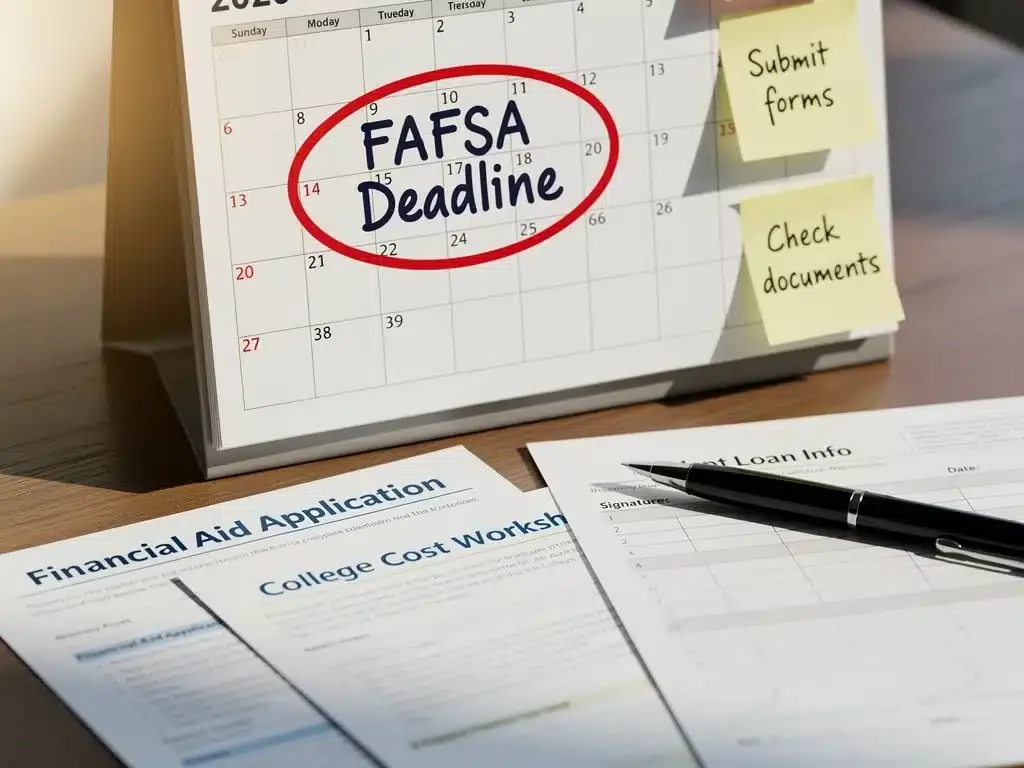
Furthermore, families should be aware of potential changes to the FAFSA process, as federal regulations are periodically updated.
Staying informed through official government channels and college financial aid offices will help ensure compliance and maximize eligibility for aid. This ongoing vigilance is part of a robust plan for college in 2026.
Scholarships and Grants: Maximizing Free Money Opportunities
Scholarships and grants represent “free money” for college, as they do not need to be repaid.
Pursuing these opportunities aggressively can significantly reduce the overall cost of higher education. Students should begin their scholarship search early, ideally during their junior year of high school.
Scholarships are available from a myriad of sources, including colleges and universities, private organizations, foundations, and corporations.
They can be merit-based, need-based, or awarded for specific talents, interests, or affiliations. A comprehensive search strategy is key for college in 2026 applicants.
Grants are typically need-based and often come from federal or state governments, or directly from institutions.
The FAFSA is the primary application for federal grants like the Pell Grant. Understanding the criteria for various grants is crucial for Preparing for College.
Strategies for a Successful Scholarship Search
Students should create a detailed profile of their academic achievements, extracurricular activities, community service, and unique skills.
This profile can be tailored to various scholarship applications, highlighting relevant strengths and experiences. Organization is paramount in this competitive landscape.
Utilize online scholarship search engines, but also explore local opportunities through high school guidance counselors, community organizations, and employers.
Many smaller, local scholarships have less competition, increasing the chances of success. Persistence and thoroughness are vital for college in 2026 applicants.
Pay close attention to essay prompts, recommendation letter requirements, and submission deadlines. A well-crafted application that genuinely reflects the student’s personality and achievements can make a significant difference.
Dedication to this process is an investment in future educational funding for Preparing for College.
- Start Early: Begin scholarship search during junior year of high school.
- Diversify Sources: Look for national, local, institutional, and private scholarships.
- Tailor Applications: Customize essays and recommendations for each opportunity.
- Meet Deadlines: Strict adherence to submission dates is non-negotiable.
Moreover, students should not overlook scholarships offered directly by the colleges they are applying to.
Many institutions have their own scholarship programs, often tied to admission applications, which can provide substantial financial relief. Inquiry about these institutional scholarships is a proactive step for college in 2026.
Considering Student Loans: Federal vs. Private Options
Even with diligent savings and successful financial aid applications, many families may still need to consider student loans to cover the remaining costs.
It is crucial to understand the differences between federal and private student loans, as their terms and benefits vary significantly.
Federal student loans generally offer more favorable terms, including fixed interest rates, income-driven repayment plans, and potential for deferment or forbearance.
They also do not require a credit check for most undergraduate loans. These protections make federal loans the preferred first option for families funding college in 2026.
Private student loans are offered by banks and other financial institutions. They often have variable interest rates, fewer repayment options, and typically require a creditworthy co-signer.
While they can fill funding gaps, they should generally be considered only after exhausting all federal aid options. This careful evaluation is key for Preparing for College.
Understanding Loan Terms and Repayment
Before taking out any loan, families and students must fully understand the interest rates, fees, and repayment terms.
Federal loans, such as Direct Subsidized and Unsubsidized Loans, have different eligibility criteria and benefits. Parent PLUS Loans are also federal but accrue interest during school.
Private loan terms can vary widely, so comparing offers from multiple lenders is essential.
Pay close attention to whether interest accrues while the student is in school, as this can significantly increase the total amount repaid. Responsible borrowing is paramount for college in 2026.
Families should also discuss repayment strategies, including who will be responsible for payments and how those payments will fit into future budgets.
Understanding the long-term commitment of student loan debt is a critical part of Preparing for College.
- Federal Loans First: Prioritize Direct Subsidized and Unsubsidized Loans.
- Parent PLUS Loans: Consider these federal loans for parents.
- Private Loans: Use as a last resort, compare rates and terms carefully.
- Repayment Planning: Understand interest rates, fees, and future payment responsibilities.

Moreover, educating students about the implications of student loan debt is crucial.
Fostering a clear understanding of financial responsibility and the impact of borrowing on future financial freedom can help them make informed decisions during their college years and beyond.
This preparation is a vital component of Preparing for College.
Alternative Paths and Cost-Saving Measures
College education does not always mean a traditional four-year university experience right after high school.
Exploring alternative paths and cost-saving measures can significantly reduce educational expenses without compromising academic quality or future career prospects. These options are increasingly relevant for families planning for college in 2026.
Community colleges offer an excellent opportunity to complete general education requirements at a fraction of the cost of a four-year institution.
Many students attend community college for a year or two and then transfer to a university, saving thousands of dollars while still earning a bachelor’s degree. This strategy is a smart financial move for Preparing for College.
Other cost-saving strategies include attending an in-state public university, living at home during college, and taking advantage of dual enrollment programs in high school.
These programs allow students to earn college credits simultaneously with high school credits, reducing the number of costly college courses needed later.
Exploring Vocational Training and Apprenticeships
For some students, vocational training or apprenticeships might be a more suitable and cost-effective path than a traditional four-year degree.
These programs often lead directly to well-paying jobs in skilled trades, with significantly less debt and a faster entry into the workforce. This is a practical consideration for college in 2026 discussions.
Vocational schools focus on practical skills and industry-specific training, preparing students for careers in fields like healthcare, technology, and manufacturing.
Apprenticeships combine on-the-job training with classroom instruction, allowing individuals to earn a salary while learning a trade. These pathways offer immediate financial benefits.
Families should discuss these alternatives openly with their students, considering their interests, career aspirations, and financial situation.
A non-traditional approach can lead to equally successful and fulfilling careers, often with a much lower financial burden. This broader perspective is essential for Preparing for College.
- Community College: Start with lower-cost general education credits.
- In-State Public Universities: Significantly cheaper than out-of-state or private options.
- Live at Home: Substantial savings on room and board.
- Dual Enrollment/AP Credits: Earn college credits in high school to reduce future costs.
Furthermore, some universities offer accelerated degree programs, allowing students to complete their bachelor’s degree in less than four years, thereby reducing overall expenses. Researching these less common options can uncover significant savings for families diligently Preparing for College in 2026: A Financial Checklist for Families (PRACTICAL SOLUTIONS, TIME-SENSITIVE).
The Role of Family Communication and Student Involvement
Open and honest communication within the family about college finances is paramount.
Students should be actively involved in the financial planning process, understanding the costs involved, the family’s contributions, and their own responsibilities. This fosters financial literacy and a sense of ownership.
Discussions should cover topics such as the family’s ability to contribute, the expected student contribution through work or scholarships, and the implications of student loan debt.
Establishing clear expectations early on helps mitigate misunderstandings and financial stress later. This collaborative approach is vital for college in 2026 planning.
Encouraging students to seek out part-time jobs during high school and college can help them contribute to their education and gain valuable work experience.
Every dollar earned can reduce the amount needed from savings or loans. This active participation strengthens the overall financial strategy for Preparing for College.
Teaching Financial Literacy to Future College Students
Beyond simply discussing costs, families have an opportunity to instill crucial financial literacy skills in their children.
Teaching budgeting, saving, and the responsible use of credit will serve them well not only in college but throughout their adult lives.
Involve students in reviewing financial aid offers, comparing costs between institutions, and understanding the long-term implications of their choices.
This hands-on experience provides practical education that textbooks often cannot. Empowering students with this knowledge is a key aspect of preparing for college in 2026.
Discuss hypothetical scenarios, such as managing a budget for living expenses or understanding interest accumulation on loans. These practical exercises can demystify complex financial concepts and build confidence in managing money independently.
This foundation is invaluable for Preparing for College in 2026.
- Open Dialogue: Discuss family contributions, student responsibilities, and loan implications.
- Student Employment: Encourage part-time work to contribute to expenses.
- Budgeting Skills: Teach students how to manage their money effectively.
- Loan Understanding: Explain interest, repayment, and total cost of borrowing.
Ultimately, the goal is to equip students with the financial acumen to make sound decisions throughout their college journey and beyond. A well-informed student is better positioned to succeed academically and financially, making the investment in their education truly worthwhile for college in 2026.
The Importance of Regular Reviews and Adjustments
Financial planning for college is not a one-time event; it’s an ongoing process that requires regular review and adjustment.
Economic conditions, tuition rates, and family circumstances can change, necessitating revisions to the initial plan. Staying flexible is key for those Preparing for College.
Families should schedule annual check-ins to assess their savings progress, review investment performance, and re-evaluate their financial aid strategy.
This proactive approach allows for course corrections before minor issues become major obstacles. Regular monitoring ensures the plan remains aligned with evolving realities.
As students approach their senior year, the focus will shift from long-term savings to immediate application processes and comparing financial aid offers.
Being prepared to adapt to new information and make timely decisions will be crucial for a smooth transition into college in 2026.
Adapting to Changes in Financial Aid Policies
Federal and institutional financial aid policies can change, sometimes with little notice. Staying informed about these potential shifts is vital. Websites like studentaid.gov and college financial aid pages are excellent resources for the latest updates.
This vigilance is part of a robust plan for college in 2026.
For instance, changes to the FAFSA methodology or eligibility criteria could impact a family’s expected family contribution (EFC) or student aid index (SAI), affecting their aid eligibility.
Understanding these changes can help families adjust their expectations and strategies accordingly. This adaptability is critical for Preparing for College.
If a family experiences a significant change in financial circumstances, such as job loss or medical expenses, they should contact the college’s financial aid office.
Many institutions have an appeals process for special circumstances, which could lead to additional aid. Knowing these options provides a safety net for unexpected challenges.
| Key Action | Description |
|---|---|
| Start Savings Early | Utilize 529 plans and other tax-advantaged accounts for compounding growth. |
| Complete FAFSA Timely | Submit the FAFSA and CSS Profile as early as possible after October 1, 2025. |
| Aggressively Seek Scholarships | Apply for various scholarships and grants to reduce reliance on loans. |
| Plan for Loans Wisely | Prioritize federal loans over private, understanding all terms and repayment options. |
Frequently Asked Questions About College Financial Planning
When should families ideally start saving for college?▼Ideally, families should start saving for college as early as possible, even from a child’s birth. The longer the money has to grow through compounding interest, the more substantial the savings will become. Early planning significantly eases the financial burden for Preparing for College in 2026: A Financial Checklist for Families (PRACTICAL SOLUTIONS, TIME-SENSITIVE).
What are the main differences between federal and private student loans?▼Federal student loans offer fixed interest rates, income-driven repayment plans, and borrower protections. Private loans are from banks, often have variable rates, fewer protections, and require a good credit score or co-signer. Federal loans are generally preferable due to their more favorable terms for college in 2026 applicants.
How important is the FAFSA for financial aid?▼The FAFSA (Free Application for Federal Student Aid) is extremely important as it is the gateway to virtually all federal, state, and institutional financial aid, including grants, scholarships, and federal loans. Completing it accurately and on time is crucial for maximizing aid eligibility for Preparing for College in 2026: A Financial Checklist for Families (PRACTICAL SOLUTIONS, TIME-SENSITIVE).
Can community college save money on a bachelor’s degree?▼Yes, attending community college for the first one or two years can significantly save money. Tuition at community colleges is typically much lower than at four-year universities. Students can complete general education requirements and then transfer credits to a four-year institution, reducing the overall cost of their bachelor’s degree for college in 2026.
What role does student involvement play in college financial planning?▼Student involvement is crucial for fostering financial literacy and a sense of ownership. When students understand costs, contribute to savings, and participate in aid applications, they gain valuable money management skills. This active participation prepares them for financial responsibility in college and beyond for Preparing for College in 2026: A Financial Checklist for Families (PRACTICAL SOLUTIONS, TIME-SENSITIVE).
Next Steps
The imperative to act now for Preparing for College in 2026: A Financial Checklist for Families (PRACTICAL SOLUTIONS, TIME-SENSITIVE) cannot be overstated.
Families should initiate or review their college savings plans, paying close attention to tax-advantaged options like 529 plans.
The upcoming FAFSA cycle, likely opening in October 2025 for the 2026-2027 academic year, demands meticulous preparation and timely submission to maximize financial aid eligibility.
Moreover, a proactive scholarship search, coupled with an understanding of federal versus private loan options, forms the bedrock of a robust financial strategy.
Open communication within families about financial expectations and student involvement in the process will cultivate financial literacy and shared responsibility.
By taking these strategic steps, families can navigate the complexities of college funding with greater confidence and secure a brighter educational future.
To begin mapped-out timelines, access budgeting toolkits, and explore official checklists for students and parents, you can use the federal guides on how to prepare for college at Federal Student Aid.