Accelerated Degree Pathways: Reshaping Higher Education in 2026
Advertisements

Universities across the U.S. are accelerating degree pathways to offer 3-year bachelor's programmes aimed at reducing tuition costs and speeding workforce entry.
This brief outlines how these condensed degrees are reshaping higher education in 2026, their key benefits for students, and what trends to track next.
The Rise of Accelerated Degree Pathways
The concept of accelerated degree pathways has gained substantial traction, moving from a novel idea to a mainstream educational option. Universities are responding to calls for more flexible and cost-effective higher education models, driven by economic pressures and a desire for quicker career entry.
This movement is not merely about condensing existing curricula; it involves a fundamental redesign of academic programmes to maintain rigor and comprehensive learning outcomes. Institutions are carefully structuring these 3-year programmes to ensure students acquire the necessary knowledge and skills without compromising quality.
The momentum behind these accelerated degree pathways reflects a broader societal trend towards efficiency and a pragmatic approach to education. Students and parents are increasingly scrutinizing the return on investment for higher education, making shorter, more focused programmes highly attractive.
Driving Factors Behind the Shift
Several key factors are propelling the adoption of accelerated degree pathways across the United States. Economic considerations, including rising tuition costs and student debt, are paramount for many prospective students and their families.
Furthermore, the rapidly changing job market demands graduates who can quickly adapt and contribute. Three-year programmes offer a quicker route to professional life, enabling graduates to enter the workforce sooner and begin accumulating experience.
Reduced tuition fees and living expenses over a shorter period.
Earlier entry into the job market, providing a head start on career progression.
Increased attractiveness for students seeking efficient and focused academic experiences.
Curricular Innovation and Design
Designing effective 3-year bachelor programmes requires significant curricular innovation. Universities are not simply cutting courses but re-evaluating core competencies and streamlining learning objectives to fit a compressed timeline.
This often involves more intensive course loads, interdisciplinary approaches, and a greater emphasis on practical, applied learning. The goal is to ensure that graduates of accelerated degree pathways are just as well-prepared, if not more so, than their four-year counterparts.
Academic departments are collaborating closely to identify redundancies and optimize course sequencing, ensuring a coherent and rigorous educational experience. The focus remains on delivering high-quality education within a more efficient framework.
Benefits for Students and Institutions
The advantages of accelerated degree pathways extend to both students and educational institutions. For students, the primary benefits include significant cost savings and a faster transition into their chosen careers, reducing the overall financial burden of higher education.
These programmes also appeal to highly motivated students who are eager to engage with their studies intensely and progress quickly. The focused nature of 3-year degrees can foster a sense of urgency and dedication among participants, enhancing their academic performance.
Institutions, in turn, benefit from increased enrollment, improved student retention rates, and the ability to attract a more diverse pool of applicants. Offering these innovative pathways can enhance a university's reputation as forward-thinking and responsive to modern educational demands.

Financial and Time Efficiencies
One of the most compelling aspects of accelerated degree pathways is the considerable financial savings they offer. By completing a degree in three years instead of four, students save an entire year's worth of tuition, housing, and other living expenses, which can amount to tens of thousands of dollars.
This financial relief can significantly reduce student loan debt, allowing graduates to start their professional lives on a stronger economic footing. The time saved also translates into an earlier start in the workforce, potentially leading to an extra year of salary and career progression.
The efficiency of these programmes makes higher education more accessible and less burdensome, aligning with broader goals of increasing educational attainment and reducing the cost barrier for many aspiring students.
Enhanced Career Readiness
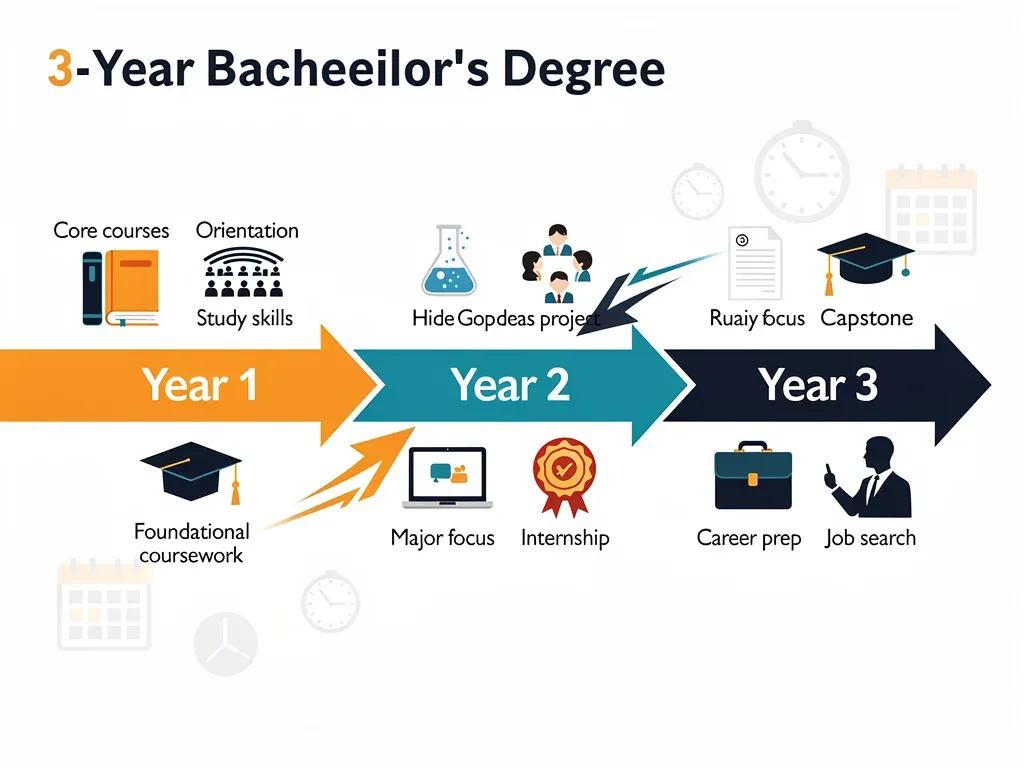
Accelerated degree pathways are often designed with a strong focus on career readiness, integrating practical skills and professional development throughout the curriculum. This emphasis ensures that students are not only academically proficient but also prepared for the demands of the modern workplace.
Many 3-year programmes incorporate internships, co-op experiences, and capstone projects that provide real-world application of classroom learning. This hands-on experience is invaluable for graduates entering competitive job markets, giving them a distinct advantage.
The condensed nature of these programmes encourages students to be proactive in their career planning and skill development from the outset. This prepares them to hit the ground running upon graduation, making them highly attractive to employers.
Challenges and Considerations
While the benefits of accelerated degree pathways are clear, their implementation is not without challenges. Maintaining academic rigor within a compressed timeline requires careful planning and dedicated resources from universities. Ensuring that students do not feel overwhelmed or that the quality of education is not compromised is a critical concern.
Furthermore, the intensity of these programmes may not suit all students. Some learners thrive with more time for reflection, extracurricular activities, and a broader exploration of academic interests. Universities must provide adequate support services to help students navigate the demanding schedule of a 3-year degree.
Accreditation bodies and employers also need to fully recognize and value these accelerated qualifications. Building confidence in the quality and equivalence of 3-year degrees compared to traditional four-year programmes is essential for widespread acceptance and success.
Academic Rigor and Student Well-being
A primary challenge for accelerated degree pathways is balancing the need for speed with the imperative of academic excellence. Universities must ensure that the curriculum remains comprehensive and challenging, providing students with a deep understanding of their chosen field.
The increased workload and reduced leisure time in a 3-year programme can also impact student well-being. Institutions must implement robust academic advising, mental health support, and time management resources to help students cope with the intensity.
Maintaining a holistic educational experience that includes opportunities for personal growth and social engagement, despite the compressed schedule, is crucial for the long-term success and satisfaction of students in these programmes.
Employer and Accreditation Acceptance
For accelerated degree pathways to be truly successful, they must be widely accepted and valued by employers and professional organizations. Universities are actively engaging with industry partners to ensure that their 3-year programmes meet current and future workforce needs.
Accreditation bodies play a vital role in validating the quality and standards of these innovative programmes. Their endorsement provides assurance to students, parents, and employers that the accelerated degrees are equivalent to traditional qualifications in terms of academic standing.
Ongoing communication and collaboration between educational institutions, employers, and accreditors are essential to foster trust and ensure the seamless integration of 3-year bachelor programmes into the broader educational and professional landscape.
Emerging Trends and Future Outlook
Looking ahead to 2026, accelerated degree pathways are expected to become an even more entrenched feature of the higher education system. The demand for efficient, career-focused education will only intensify, pushing more institutions to develop and refine their 3-year offerings.
We can anticipate a greater diversification of disciplines available through these pathways, moving beyond traditionally accelerated fields like business or nursing. The integration of technology, particularly online and hybrid learning models, will further enhance the flexibility and accessibility of these programmes.
The future of higher education will likely see a blend of traditional and accelerated models, with universities offering a spectrum of options to cater to diverse student needs and learning styles. This evolution underscores a commitment to innovation and responsiveness in the academic sector.
Technological Integration and Flexibility
Technology is poised to play a pivotal role in the expansion and refinement of accelerated degree pathways. Online and hybrid learning platforms can offer students greater flexibility, allowing them to complete coursework at their own pace while still adhering to a condensed timeline.
Digital resources, virtual labs, and interactive simulations can enhance the learning experience, making intensive curricula more engaging and effective. This integration enables universities to reach a wider audience, including working professionals and non-traditional students seeking to upskill or reskill quickly.
The continuous evolution of educational technology will further support the development of innovative pedagogical approaches within 3-year programmes, ensuring they remain at the forefront of modern learning.
Diversification of Offerings
Initially, accelerated degree pathways were often concentrated in specific fields that lent themselves well to condensed study. However, the trend for 2026 indicates a significant diversification of disciplines embracing the 3-year model.
We are seeing an expansion into humanities, social sciences, and even some STEM fields, as institutions find creative ways to streamline curricula without sacrificing depth. This broader availability will make accelerated degrees a viable option for a greater number of students with varied academic interests.
This diversification reflects a growing confidence in the efficacy of these programmes and a commitment by universities to provide efficient educational solutions across the academic spectrum.
Key Aspect | Description |
|---|---|
Programme Duration | Bachelor's degrees completed in three years instead of four. |
Key Benefits | Reduced costs, faster career entry, enhanced efficiency for students. |
Challenges | Maintaining academic rigor, student well-being, employer acceptance. |
Future Outlook | Increased adoption, diversification of fields, technology integration. |
Frequently Asked Questions about Accelerated Degree Pathways
What exactly are accelerated degree pathways?▼
Accelerated degree pathways are higher education programmes designed to allow students to complete a bachelor's degree in a shorter timeframe, typically three years instead of the traditional four. This is achieved through intensive course loads, summer sessions, and streamlined curricula, focusing on core competencies.
Are 3-year bachelor programmes as credible as 4-year degrees?▼
Yes, reputable 3-year bachelor programmes are designed to maintain the same academic standards and learning outcomes as their 4-year counterparts. They are often accredited by the same bodies, ensuring quality and employer recognition. The focus is on efficiency without compromising educational depth.
What are the main benefits of choosing an accelerated degree?▼
The primary benefits include significant cost savings on tuition and living expenses, earlier entry into the workforce, and a quicker start to career progression. These programmes appeal to highly motivated students seeking an efficient and focused path to their professional goals.
What challenges might students face in these programmes?▼
Students in accelerated degree pathways may experience a more intense workload and less time for extracurricular activities. It requires strong time management skills and dedication. Universities typically offer robust support services to help students manage the demanding academic schedule effectively.
How are universities adapting to offer these pathways?▼
Universities are adapting by redesigning curricula, optimizing course sequencing, and integrating technology for flexible learning. They are also collaborating with employers to ensure programmes are career-relevant and engaging with accreditation bodies to ensure widespread acceptance and recognition of these innovative pathways.
Looking Ahead
The proliferation of accelerated degree pathways underscores a pivotal moment in higher education, signaling a responsive shift towards student-centric and economically viable models.
As universities continue to refine their 3-year bachelor programmes, the focus remains on delivering quality education that aligns with the evolving demands of the global workforce.
To see how state institutions are implementing these streamlined credentials, read this coverage on California's 3-year bachelor's degree expansion.
Monitoring the integration of technology and the diversification of these offerings will be key indicators of how Accelerated Degree Pathways: How 3-Year Bachelor Programmes Are Reshaping Higher Education in 2026 will continue to influence academic and professional landscapes.