2026 AMT Thresholds: Impact on Stock Options Over $50,000
Advertisements
Latest developments on How the 2026 Alternative Minimum Tax Thresholds Impact Stock Options Over $50,000, with key facts, verified sources and what readers need to monitor next in Estados Unidos, presented clearly in Inglês (África do Sul) (en-ZA).
How the 2026 Alternative Minimum Tax Thresholds Impact Stock Options Over $50,000 is shaping today’s agenda with new details released by officials and industry sources. This update prioritizes what changed, why it matters and what to watch next, in a straightforward news format.
Understanding the 2026 AMT Threshold Adjustments
The impending adjustments to the Alternative Minimum Tax (AMT) thresholds for 2026 are poised to significantly affect individuals holding stock options valued over $50,000.
These changes, part of broader tax reforms, aim to ensure that high-income earners pay a minimum amount of tax, regardless of deductions or credits.
For many, the AMT has historically been a secondary concern, impacting a relatively small subset of taxpayers. However, the revised thresholds could bring more individuals with substantial stock option gains into the AMT net, necessitating a re-evaluation of current financial strategies.
The shift represents a critical development for employees and executives compensated with stock options, particularly those whose equity compensation forms a significant portion of their wealth. Proactive planning is essential to navigate these evolving tax landscapes effectively.
The Mechanics of AMT and Stock Options
The Alternative Minimum Tax operates as a parallel tax system, designed to prevent taxpayers from avoiding tax liability through certain deductions and credits.
When exercising Incentive Stock Options (ISOs), the difference between the fair market value of the shares and the exercise price is treated as income for AMT purposes, even if the shares are not immediately sold.
This phantom income can create a substantial tax bill, often catching taxpayers by surprise, especially when the stock price has appreciated significantly. The increased 2026 AMT thresholds mean that more individuals with valuable stock options will likely encounter this scenario.
Understanding the interplay between ISOs and AMT is paramount. Unlike non-qualified stock options (NSOs), where the spread is taxed as ordinary income upon exercise, ISOs receive preferential tax treatment for regular tax purposes but are subject to AMT considerations.
Who Will Be Most Affected by the Changes?
Individuals with significant equity compensation, particularly those in high-growth industries like technology and biotechnology, are most likely to be impacted by How the 2026 Alternative Minimum Tax Thresholds Impact Stock Options Over $50,000.
This includes employees who have accumulated substantial stock option grants over time.
Executives and long-tenured employees who have deferred exercising their options, anticipating future growth, will need to reassess their timing. The new thresholds could accelerate tax liabilities that were previously avoidable or deferred under older rules.
Furthermore, those who plan to exercise and hold their ISOs for the long term to qualify for capital gains treatment under regular tax rules must now carefully model their AMT exposure. The strategy of a qualifying disposition might become more complex and costly.
Key Demographics at Risk
Technology sector employees with unexercised ISOs.
Executives with substantial deferred equity compensation.
Individuals whose stock option spread exceeds the $50,000 threshold.
Strategic Planning for Stock Option Holders
Effective planning is crucial to mitigate the impact of How the 2026 Alternative Minimum Tax Thresholds Impact Stock Options Over $50,000. This involves a comprehensive review of existing stock option grants, exercise strategies, and overall financial goals.
Tax advisors recommend scenario planning, simulating different exercise dates and stock price movements to understand potential AMT liabilities. This proactive approach allows for adjustments to be made before the 2026 changes take full effect.
Consideration should be given to alternative strategies, such as staggering option exercises over multiple years or exploring cashless exercise options, though these also come with their own tax implications. The goal is to optimize after-tax returns while complying with the new regulations.

Actions to Consider Now
Review current stock option holdings and vesting schedules.
Consult with a tax professional experienced in equity compensation.
Model potential AMT liabilities under various exercise scenarios.
Implications for Financial Advisors and Employers
Financial advisors play a pivotal role in guiding clients through these complex tax changes. They must stay abreast of the 2026 AMT threshold adjustments and effectively communicate their implications to clients with stock options over $50,000.
Employers, particularly those that heavily rely on stock options as compensation, also face new challenges. They may need to revise their communication strategies to employees regarding equity compensation and provide resources for tax planning.
Providing educational materials and access to tax planning tools can help employees understand the potential impact on their finances. This proactive support can enhance employee satisfaction and retention, especially during periods of significant tax law changes.
Case Studies: Navigating the New AMT Landscape
Consider a software engineer with ISOs valued at $200,000, planning to exercise in 2026. Under previous AMT thresholds, they might have avoided significant AMT liability. However, with the new rules, this individual could face a substantial AMT bill, even if they hold the shares.
Another example involves a startup executive with a large tranche of ISOs vesting in late 2025. Exercising before the 2026 changes might be advantageous, but requires careful analysis of market conditions and personal financial liquidity.
These scenarios underscore the critical need for individualized tax planning.
Generic advice will not suffice when navigating How the 2026 Alternative Minimum Tax Thresholds Impact Stock Options Over $50,000. Each taxpayer's situation, including their income, deductions, and other investments, must be considered.
The Broader Economic Context of Tax Reform
The adjustments to the AMT thresholds are part of a broader effort to reform the U.S. tax code, aiming for greater equity and increased revenue generation. These changes reflect an ongoing debate about how to tax wealth and high-income earners effectively.
The impact of these tax reforms extends beyond individual taxpayers, potentially influencing corporate compensation strategies and the attractiveness of stock options as an incentive. Companies may need to re-evaluate their equity compensation plans to remain competitive.
Economists and policy makers will be closely monitoring the effects of these changes on investment behaviour, market liquidity, and overall economic growth. The goal is to strike a balance between tax fairness and economic dynamism.
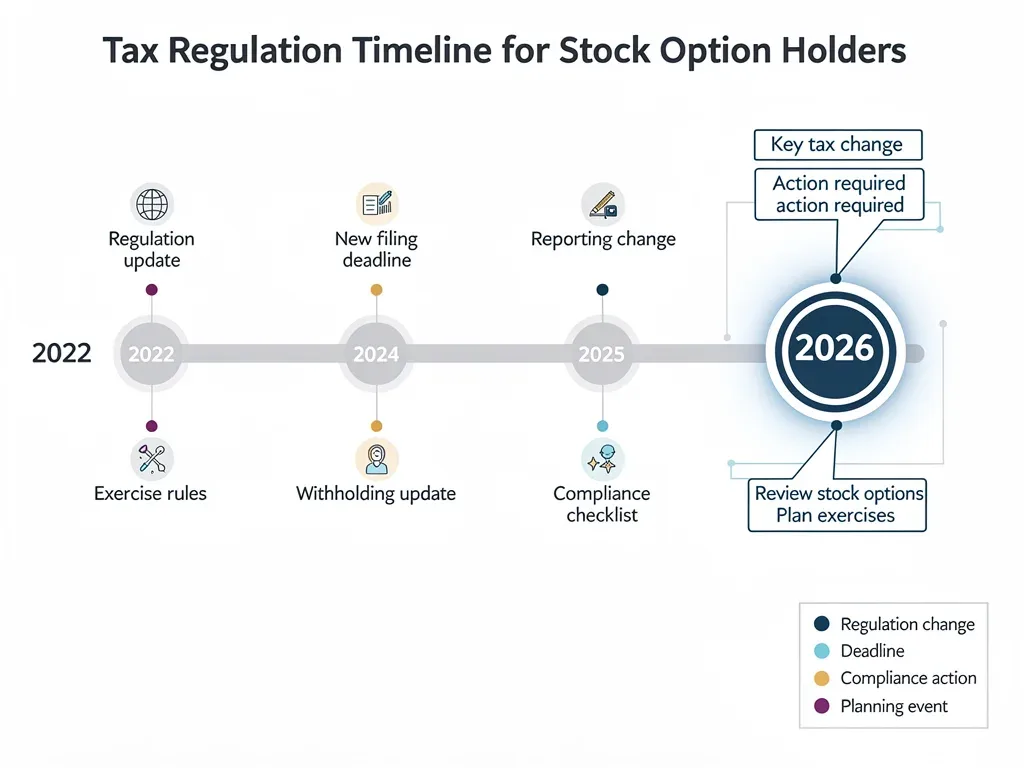
Preparing for Future Tax Law Changes
The 2026 AMT threshold changes serve as a reminder of the dynamic nature of tax law. Individuals and financial professionals must adopt a continuous learning approach to stay informed about potential future reforms.
Subscribing to tax updates, attending webinars, and maintaining open communication with tax advisors are essential steps. Proactive engagement with tax planning can help mitigate surprises and optimize financial outcomes over the long term.
The landscape of equity compensation and taxation is constantly evolving. Staying informed about How the 2026 Alternative Minimum Tax Thresholds Impact Stock Options Over $50,000 is not a one-time event, but an ongoing commitment to sound financial stewardship.
Key Point | Brief Description |
|---|---|
AMT Thresholds | Increased thresholds in 2026 will affect more stock option holders. |
Stock Options Impact | ISOs exercised with a spread over $50,000 are particularly vulnerable to AMT. |
Planning Urgency | Proactive tax planning is critical before 2026 to mitigate liabilities. |
Advisor Role | Financial advisors must guide clients through complex new tax scenarios. |
Frequently Asked Questions About 2026 AMT and Stock Options
What are the primary changes to the 2026 AMT thresholds?▼
The 2026 AMT thresholds are being adjusted, which will likely bring more individuals, especially those with significant stock option gains, into the scope of the Alternative Minimum Tax. These adjustments aim to broaden the tax base for high-income earners, affecting tax planning strategies.
How will these changes specifically impact stock options over $50,000?▼
For Incentive Stock Options (ISOs) where the difference between the fair market value and the exercise price exceeds $50,000, this spread is considered income for AMT purposes. The new thresholds mean a higher likelihood of incurring AMT liability upon exercise, even if shares are not immediately sold.
What steps should stock option holders take now to prepare?▼
Stock option holders should review their current grants, model potential AMT liabilities under various exercise scenarios, and consult with a qualified tax advisor. Developing a proactive exercise strategy before 2026 is crucial to optimize after-tax returns and minimize unexpected tax burdens.
Are there any exemptions or ways to avoid the AMT on stock options?▼
While complete avoidance of AMT on ISOs might be challenging with significant gains, strategies like staggering exercises over multiple years or considering non-qualified stock options (NSOs) may help. Each situation is unique, requiring personalized advice from a tax professional to identify the best approach.
When should I consult a financial advisor regarding these changes?▼
It is advisable to consult a financial advisor as soon as possible, especially if you hold stock options valued over $50,000. Early planning allows for a thorough analysis of your financial situation and the development of a tailored strategy to navigate the 2026 AMT threshold adjustments effectively.
Looking Ahead: Navigating the Future of Equity Compensation
The adjustments to How the 2026 Alternative Minimum Tax Thresholds Impact Stock Options Over $50,000 signal a significant shift in the tax landscape for equity compensation.
This ongoing development underscores the necessity for continuous vigilance and adaptive financial planning. Individuals and companies alike must remain informed about legislative changes and their potential ramifications.
The dialogue surrounding tax fairness and wealth distribution will continue, making it imperative to monitor future policy debates and proposals. Proactive engagement with financial and tax experts is not just advisable but essential for safeguarding financial interests in an evolving regulatory environment.
Ultimately, understanding and preparing for these changes will distinguish those who successfully navigate the complexities of equity compensation taxation from those who face unexpected liabilities.
The time to act and plan for 2026 is now, ensuring robust financial health. To understand how tax adjustments and exemption limits apply to your tax return, consult the guide on What is the Alternative Minimum Tax (AMT) on FreeTaxUSA.